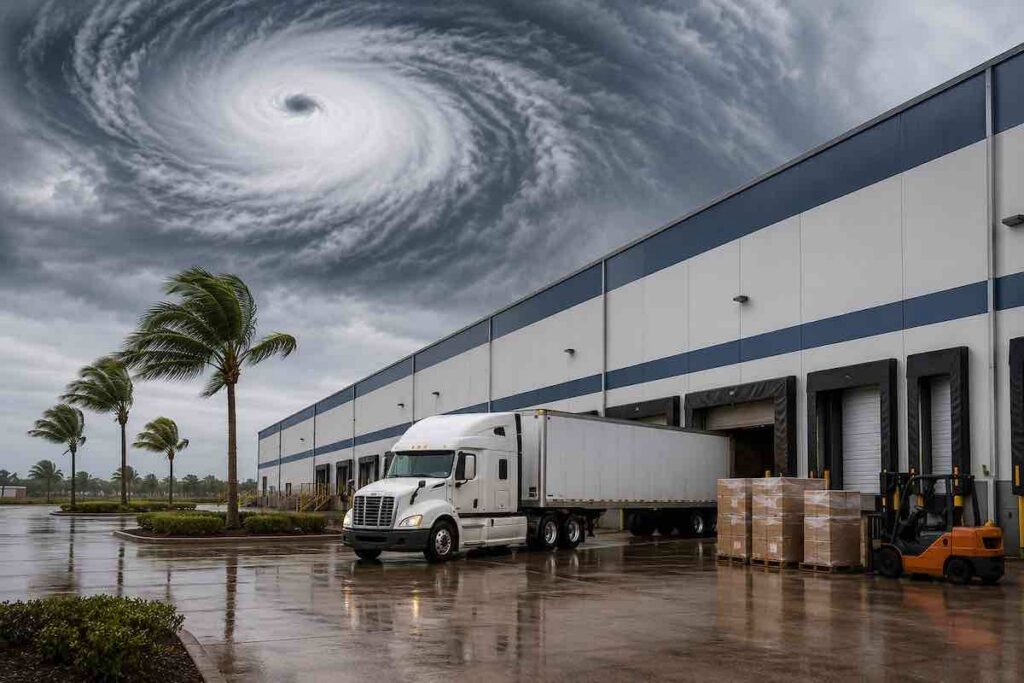
Hurricane season presents unique challenges for businesses that rely on Florida warehouses to store and distribute inventory. High winds, heavy rainfall, flooding, transportation disruptions, and power outages can all impact supply chains, making preparation essential. While no warehouse is completely immune to severe weather, choosing an inland Florida warehouse can significantly reduce many of the risks associated with coastal operations.
For companies looking to improve business continuity, protect inventory, and maintain reliable distribution throughout the Southeast, strategically located inland warehouses offer an important advantage. Combined with a proactive logistics strategy, they can help businesses minimize disruptions and recover more quickly after a storm.
Why Inland Warehouse Locations Matter
Warehouses located farther from Florida’s coastline are generally less exposed to storm surge and coastal flooding than facilities directly along the coast. While inland locations can still experience heavy rain and strong winds during hurricanes, they often face fewer risks related to tidal flooding and saltwater damage.
An inland distribution center can also provide greater flexibility when coastal transportation routes are temporarily affected.
Protecting Valuable Inventory
Many businesses store high-value products that require careful protection during severe weather events. Developing a hurricane preparedness plan helps reduce the likelihood of inventory damage and operational delays.
Common protective measures include:
- Secure indoor storage
- Organized inventory management
- Elevated pallet storage where appropriate
- Routine facility inspections
- Proper product packaging
- Backup communication plans
- Emergency operating procedures
Preparing before hurricane season begins allows warehouse teams to respond quickly when severe weather is forecast.
Diversify Your Distribution Network
Relying on a single warehouse location can increase supply chain risk. Many businesses improve resilience by distributing inventory across multiple facilities in different geographic regions.
A network that includes an inland Florida warehouse can help:
- Reduce regional disruptions
- Maintain inventory availability
- Support customer deliveries
- Improve recovery after severe weather
- Provide greater operational flexibility
This approach helps businesses continue serving customers even if one location experiences temporary interruptions.
Advanced Warehouse Technology Improves Visibility
Modern Warehouse Management Systems (WMS) provide real-time visibility into inventory before, during, and after major weather events.
Businesses can monitor:
- Inventory levels
- Shipment status
- Order fulfillment
- Receiving activity
- Product locations
Access to accurate information allows companies to make informed decisions and respond more effectively when conditions change.
Planning Transportation Around Storms
Transportation networks are often affected before and after hurricanes. Road closures, port delays, and changes in carrier schedules can impact deliveries throughout the region.
An experienced 3PL works closely with transportation partners to:
- Monitor weather conditions
- Adjust shipping schedules
- Coordinate alternative routing
- Prioritize critical shipments
- Communicate updates to customers
Planning ahead helps minimize disruptions while keeping freight moving whenever conditions safely allow.
Flexible Warehouse Capacity During Recovery
Following a hurricane, businesses may need additional storage, temporary distribution space, or increased fulfillment capacity as operations return to normal.
A third-party logistics provider can offer scalable warehousing solutions that adapt to changing business needs without requiring long-term facility investments.
This flexibility can be especially valuable during disaster recovery and seasonal demand fluctuations.
Industries That Benefit from Inland Florida Warehousing
Many industries rely on inland warehouse locations to improve supply chain resilience, including:
- E-commerce
- Retail
- Manufacturing
- Healthcare and pharmaceuticals
- Food and beverage
- Consumer goods
- Automotive
- Industrial equipment
- Solar and renewable energy
- Home improvement products
For these businesses, minimizing downtime and protecting inventory are critical to maintaining customer service.
Business Continuity Starts with the Right Logistics Partner
Preparing for hurricane season involves more than monitoring the weather. It requires a logistics partner with experienced warehouse teams, organized processes, modern technology, and the flexibility to adapt when conditions change.
An experienced Florida 3PL can provide:
- Secure warehouse storage
- Inventory management
- Order fulfillment
- Transportation coordination
- Cross docking
- Value-added warehouse services
- Reverse logistics
- Real-time inventory visibility
These services help businesses maintain operational efficiency while strengthening supply chain resilience.
Build a More Resilient Florida Supply Chain
Hurricanes are an unavoidable part of doing business in Florida, but careful planning can significantly reduce their impact. Choosing an inland warehouse location, developing a comprehensive preparedness strategy, and partnering with an experienced 3PL can help protect inventory, support business continuity, and keep products moving when it matters most.
Whether you’re expanding your Florida distribution network or looking to strengthen your existing supply chain, an inland Florida warehouse provides the flexibility, strategic location, and operational support needed to navigate hurricane season with greater confidence.