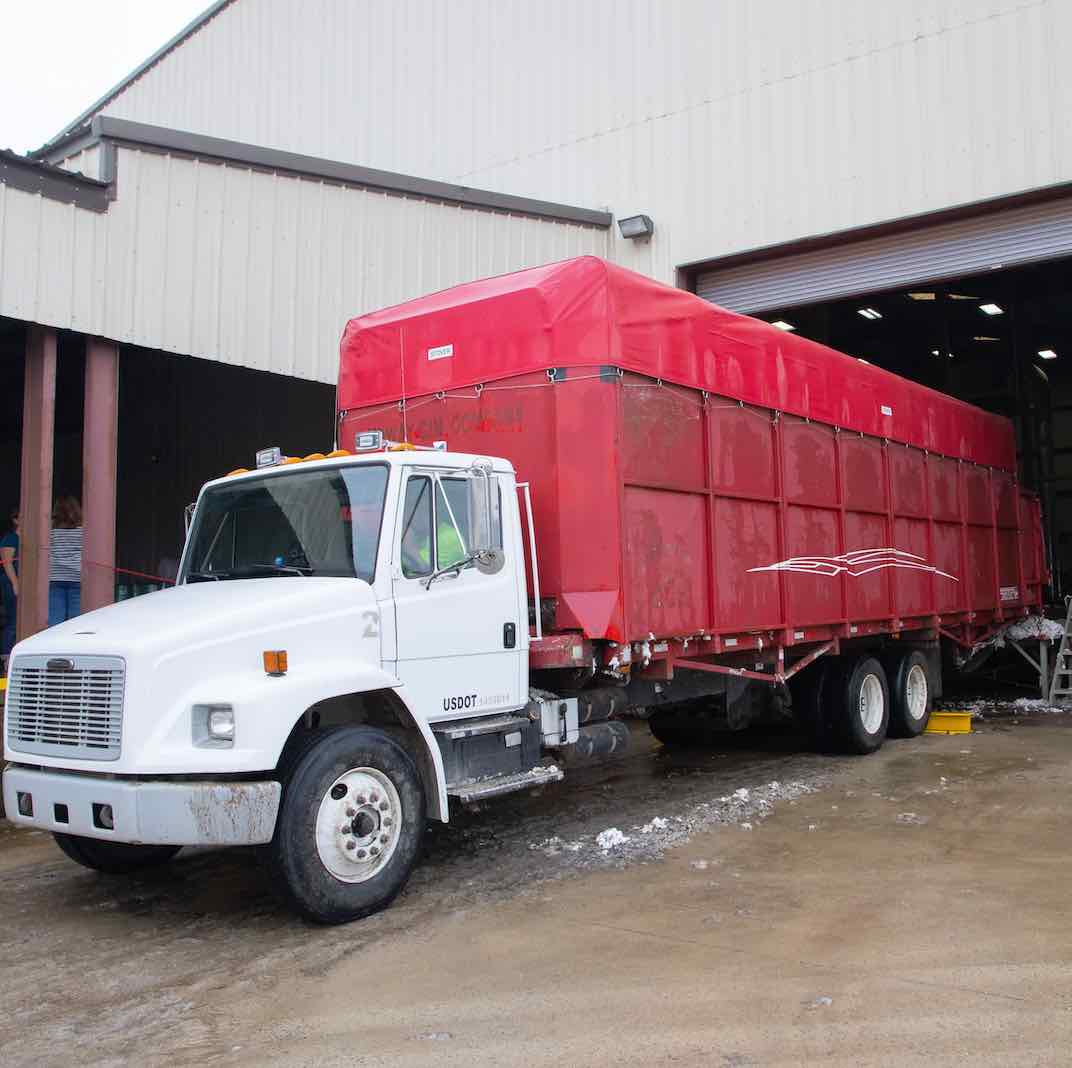
3PL Services for Enterprise and Large-Scale Organizations
Enterprise and large-scale organizations require logistics operations that deliver consistency, control, and scalability across complex supply chains. High shipment volume, multi-location distribution, and layered operational requirements demand structured workflows that can perform reliably at scale.
Logistics support for enterprise environments must align with established processes while maintaining the flexibility to adapt to changing demand, network expansion, and strategic initiatives.
Logistics Support for Complex, High-Volume Operations
Managing Scale Without Compromising Control
Large-scale operations require logistics infrastructure capable of handling significant inventory volume and shipment throughput without sacrificing visibility or accuracy. Processes must remain consistent across locations, programs, and distribution channels.
Structured logistics workflows help maintain control as scale increases.
Supporting Multi-Location and Multi-Channel Distribution
Enterprise organizations often operate across multiple facilities, regions, and distribution channels. Logistics support must coordinate inventory flow and transportation activity across this network to maintain alignment and efficiency.
Centralized coordination supports consistency across decentralized operations.
Warehousing and Inventory Management at Scale
High-Volume Storage and Inventory Coordination
Enterprise operations often manage large and diverse inventories, including raw materials, components, finished goods, or packaged products. Storage strategies must support efficient access, movement, and replenishment across high-volume environments.
Warehouse operations are structured to support throughput, accuracy, and space optimization.
Maintaining Inventory Visibility and Governance
Inventory visibility is critical at enterprise scale. Accurate tracking and reporting support planning, compliance, and operational decision-making across business units and locations.
Clear governance structures help ensure inventory accuracy across the network.
Fulfillment and Distribution Execution
Supporting Enterprise Fulfillment Requirements
Large-scale organizations may support a mix of direct-to-consumer, wholesale, retail, and business-to-business fulfillment. Fulfillment workflows must accommodate varying order profiles without creating operational friction.
Execution strategies are designed to support consistency and reliability across channels.
Coordinating High-Volume Distribution Activity
Distribution operations at scale require coordination across transportation modes, delivery schedules, and service levels. Logistics support helps align outbound movement with inventory readiness and downstream demand.
This coordination helps maintain predictable delivery performance.
Value-Added Services for Enterprise Operations
Supporting Standardized and Program-Based Workflows
Enterprise organizations often require standardized workflows across programs, product lines, or regions. Value-added services such as labeling, inspection, rework, or assembly are structured to support consistency at scale.
Standardization helps reduce variability and operational risk.
Managing Exceptions Without Disruption
Even well-structured enterprise operations encounter exceptions. Logistics workflows are designed to handle non-standard scenarios without disrupting core execution.
This balance supports resilience across complex operations.
Transportation and Network Coordination
Aligning Transportation With Enterprise Distribution Strategies
Enterprise transportation strategies often involve multiple carriers, lanes, and service levels. Logistics coordination helps align trucking, freight management, drayage, and parcel shipping with enterprise distribution objectives.
Alignment supports cost control and service consistency.
Supporting Predictable and Scalable Transportation Execution
Transportation workflows are structured to support both steady-state volume and demand fluctuations. Scalable execution helps maintain reliability during peak periods or network changes.
Risk Management and Operational Continuity
Supporting Compliance and Process Integrity
Enterprise operations often operate within strict compliance, quality, or reporting requirements. Logistics support aligns with these standards to help maintain process integrity and audit readiness.
Consistent execution helps reduce operational risk.
Ensuring Continuity During Change
Network expansion, product launches, and demand shifts introduce complexity at scale. Logistics support helps manage these changes without disrupting ongoing operations.
Continuity is maintained through structured planning and execution.
Planning a Logistics Strategy for Enterprise Operations
Logistics strategies for enterprise and large-scale organizations consider volume, network complexity, compliance requirements, and long-term scalability. Services are structured to support operational consistency while remaining adaptable to strategic change.
Van Brunt Warehousing & Logistics supports enterprise and large-scale organizations with logistics services designed to deliver control, scalability, and reliability across complex supply chain environments.